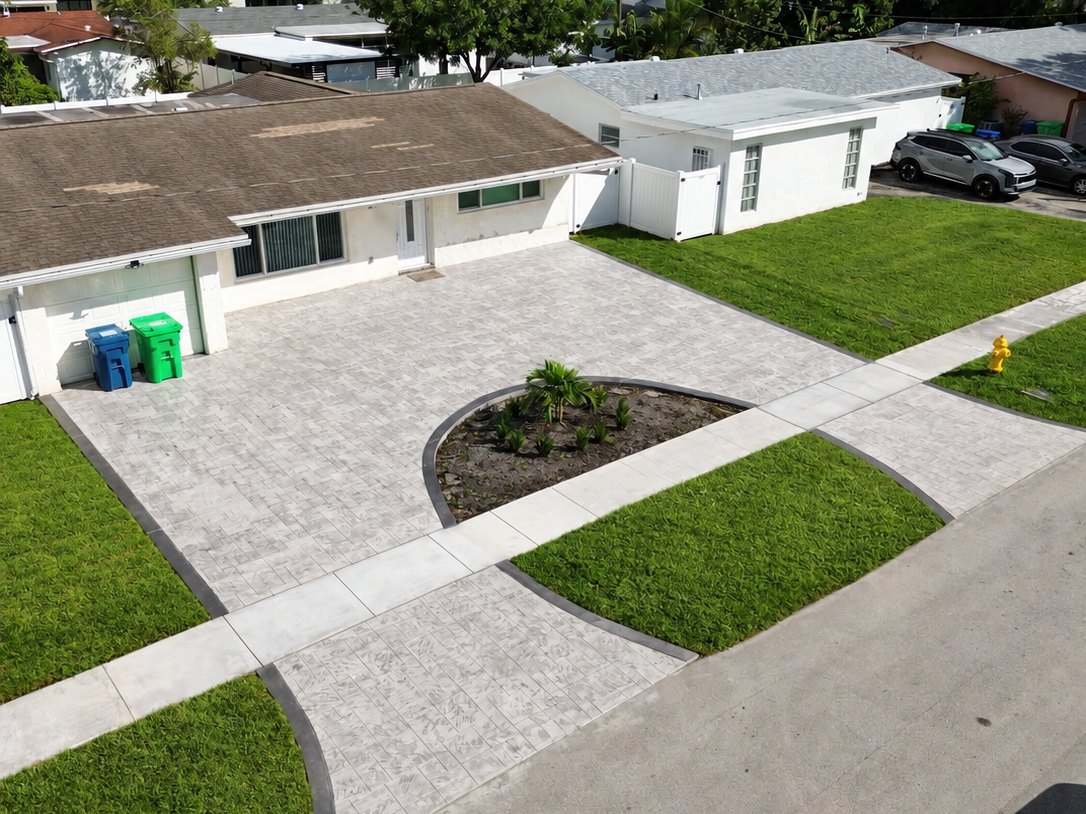
Concrete vs Pavers vs Asphalt: Best Driveway Material for South Florida
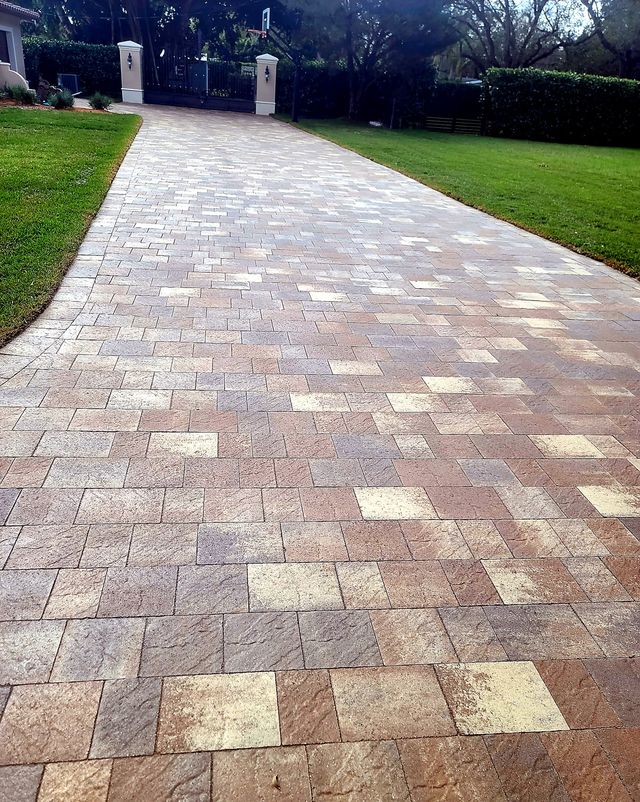
If you're replacing a driveway in South Florida, you'll probably end up comparing three options:
Concrete, pavers, and asphalt.
All three can create a functional driveway. But they perform very differently once you factor in South Florida's heat, heavy rain, daily vehicle traffic, drainage requirements, and long-term maintenance.
And there isn't one material that's automatically right for every house.
At Concrete Designs LLC, we've spent more than 20 years building driveways and outdoor spaces throughout Miami-Dade and Broward. We've seen what these materials look like when they're new — and what happens after years of South Florida weather.
Here's how concrete, pavers, and asphalt actually compare.
Quick Comparison: Concrete vs Pavers vs Asphalt
| Factor | Concrete | Pavers | Asphalt |
|---|---|---|---|
| Upfront Cost | $$ | $$$ | $-$$ |
| Design Options | Excellent | Excellent | Limited |
| Maintenance | Low | Moderate | Moderate |
| South Florida Heat | Good | Good | Can soften/get hotter |
| Individual Repairs | Moderate | Excellent | Good |
| Modern Curb Appeal | Excellent | Excellent | Basic |
| Typical Residential Fit | Excellent | Excellent | More limited |
For most South Florida homeowners looking for a balance between appearance, durability, and maintenance, concrete is usually our first recommendation.
But there are situations where pavers — or even asphalt — make more sense.
Option #1: Concrete Driveways
Concrete remains one of the most popular driveway materials throughout Miami-Dade and Broward.
You'll see it everywhere from Miami Lakes and Hialeah to Pembroke Pines and Weston.
Advantages of Concrete
Concrete offers a strong combination of:
- Durability
- Low maintenance
- Design flexibility
- Clean appearance
- Long service life
It can also be customized significantly.
Homeowners can choose:
- Traditional broom finish
- Stamped concrete
- Decorative borders
- Modern scoring patterns
- Concrete slabs with artificial turf joints
That flexibility means concrete can work on everything from a traditional South Florida home to a contemporary estate.
Disadvantages of Concrete
Concrete isn't perfect.
Its biggest downside is cracking.
Concrete naturally expands, contracts, and moves. Proper installation helps control cracking through:
- Base preparation
- Reinforcement
- Control joints
- Correct concrete placement
- Drainage planning
But no reputable contractor should promise that concrete will never crack.
We'd rather tell you that upfront than promise something concrete simply can't guarantee.
How Much Does a Concrete Driveway Cost?
For planning purposes, standard concrete driveways in South Florida commonly fall around:
$8-$15 per square foot
Stamped concrete commonly falls around:
$12-$20 per square foot
Actual project pricing depends heavily on demolition, drainage, reinforcement, access, permits, and site conditions.
We'd rather walk the property before putting a final number on it.
Option #2: Paver Driveways
Pavers are another popular choice, especially for homeowners focused heavily on design.
Instead of pouring one continuous surface, paver driveways use individual manufactured or natural units installed over a prepared base.
Advantages of Pavers
Pavers offer:
- Excellent design flexibility
- Numerous colors and patterns
- Individual piece replacement
- High-end curb appeal
- No traditional slab cracking
If one paver becomes damaged, it can often be replaced without rebuilding a large section of driveway.
That can be a major advantage.
Disadvantages of Pavers
Pavers aren't maintenance-free.
Over time, homeowners may deal with:
- Joint sand loss
- Weed growth
- Individual paver movement
- Settlement
- Ant activity
- Periodic cleaning and sealing
Installation quality is especially important.
If the base isn't properly prepared and compacted, pavers can develop dips and uneven sections.
"With pavers, the surface can look perfect on day one. The real test is whether the base underneath was built correctly."
Are Pavers More Expensive Than Concrete?
Usually, yes.
Paver pricing varies significantly depending on the manufacturer, style, pattern, and installation conditions.
Premium pavers can increase project costs considerably compared with standard concrete.
For homeowners prioritizing architectural detail and customization, that additional investment may make sense.
For homeowners prioritizing simplicity and lower maintenance, concrete often wins.
Option #3: Asphalt Driveways
Asphalt is extremely common across the United States, but it's less dominant for residential driveways in South Florida.
There are still situations where it makes sense.
Advantages of Asphalt
Asphalt typically offers:
- Lower initial cost
- Faster installation
- Easier repairs
- Flexibility under movement
For very large parking areas or certain commercial applications, asphalt can be cost-effective.
Disadvantages of Asphalt in South Florida
Our climate is where things get complicated.
South Florida combines:
- Extreme sun
- High surface temperatures
- Heavy rainfall
- Constant UV exposure
Asphalt absorbs significant heat and generally requires more ongoing maintenance than concrete.
It also provides far fewer decorative options.
For a homeowner focused heavily on curb appeal, asphalt usually doesn't offer the same architectural appearance as concrete or pavers.
Which Driveway Material Handles South Florida Rain Best?
All three can perform well when installed correctly.
The bigger issue is drainage design.
A $30,000 driveway with poor drainage can create more problems than a much simpler driveway that was graded correctly.
Before installing any material, contractors should evaluate:
- Garage elevation
- Property slope
- Swales
- Sidewalk elevations
- Water runoff
- Neighboring properties
- Existing drainage
South Florida storms expose bad grading quickly.
"The material matters, but where the water goes matters more."
Which Driveway Is Easiest to Repair?
Pavers have the advantage here.
Because they're individual pieces, sections can often be removed and reinstalled.
Asphalt can also be patched relatively easily, although repairs may remain visible.
Concrete repairs are possible, but matching an older slab's exact color and texture can be difficult.
That's one reason we sometimes recommend full panel replacement rather than repeatedly patching badly damaged concrete.
Which Has the Best Curb Appeal?
For most residential properties, the competition is really between concrete and pavers.
Pavers offer extensive patterns and colors.
Concrete offers several completely different aesthetics from one material.
For example, concrete can create:
- Minimalist modern driveways
- Traditional broom finishes
- Stamped stone appearances
- Large geometric slabs
- Turf-accented designs
For contemporary homes in areas like Aventura or Coral Gables, large-format concrete designs can create an especially clean architectural look.
What About Maintenance?
Concrete
Routine maintenance is relatively straightforward.
Decorative and stamped concrete may require periodic resealing.
Pavers
Expect more attention to:
- Joints
- Sand
- Weeds
- Settlement
- Cleaning
Sealing may also be desired depending on the product and appearance.
Asphalt
Asphalt generally requires periodic maintenance and eventually resurfacing as it ages.
If your goal is minimizing long-term maintenance, concrete has a strong advantage.
What About Permits?
Changing driveway material doesn't eliminate permitting requirements.
Depending on the municipality and scope, a driveway project may involve:
- Building permits
- Engineering/right-of-way approvals
- Surveys
- Drainage review
- Inspections
- HOA approval
Driveway widening and modifications near sidewalks, swales, or the public right-of-way can require additional review.
That's why the design should be checked before demolition begins.
So Which Driveway Material Is Best?
Here's how we'd break it down.
Choose concrete if: you want durability, lower maintenance, strong curb appeal, and plenty of design flexibility.
Choose pavers if: design variety and easy individual repairs are priorities and you're comfortable with additional maintenance.
Consider asphalt if: you're covering a large area, aesthetics aren't the main concern, and upfront economics matter more than decorative options.
For the majority of residential projects we see across Miami-Dade and Broward, concrete provides the strongest overall balance.
But we're not going to recommend concrete just because "Concrete" is in our name.
If another material makes more sense for your property, we'll tell you straight if there's a better way.
Don't Compare Driveways on Material Alone
The biggest takeaway is this:
Installation quality matters more than the logo on the material.
A properly installed paver driveway will outperform poorly installed concrete.
A properly built concrete driveway will outperform one poured over an inadequate base.
Before hiring anyone, ask:
- What's underneath the driveway?
- How is the base being prepared?
- What reinforcement is included?
- How will water drain?
- Are permits included?
- What exactly is included in demolition and disposal?
- Who handles inspections?
Those questions tell you far more than simply asking for a price per square foot.
After 20+ years doing this in South Florida, we've seen enough failed driveways to know where shortcuts usually show up.
And most of them are underneath the finished surface where the homeowner can't see them.
Family-owned · 20+ years · Miami-Dade & Broward.
FAQs
Is concrete or pavers better for a South Florida driveway?
Both can perform well. Concrete typically offers lower maintenance and excellent durability, while pavers provide more individual repair flexibility and extensive design options.
Is asphalt good for Florida driveways?
It can be, particularly for larger areas, but South Florida's intense heat and UV exposure should be considered when comparing asphalt with concrete or pavers for residential use.
Which driveway material lasts the longest?
All three materials can provide long service lives when properly installed and maintained. Base preparation, drainage, traffic, and maintenance can matter as much as material choice.
Are pavers more expensive than concrete?
Pavers are often more expensive upfront, particularly with premium materials and complex patterns. Exact pricing depends on the property and installation requirements.
Ready to figure out which material actually makes sense for your property? Schedule a free 30-minute on-site walkthrough with Concrete Designs. We'll look at the existing driveway, drainage, layout, and what you're trying to accomplish — and tell you straight if there's a better way.
Call (786) 269-9215 or visit Concrete Designs LLC. No pressure, no quote unless you ask for one. Ask about 0% APR financing through Wisetack and Wells Fargo.
Family-owned · 20+ years · Miami-Dade & Broward.