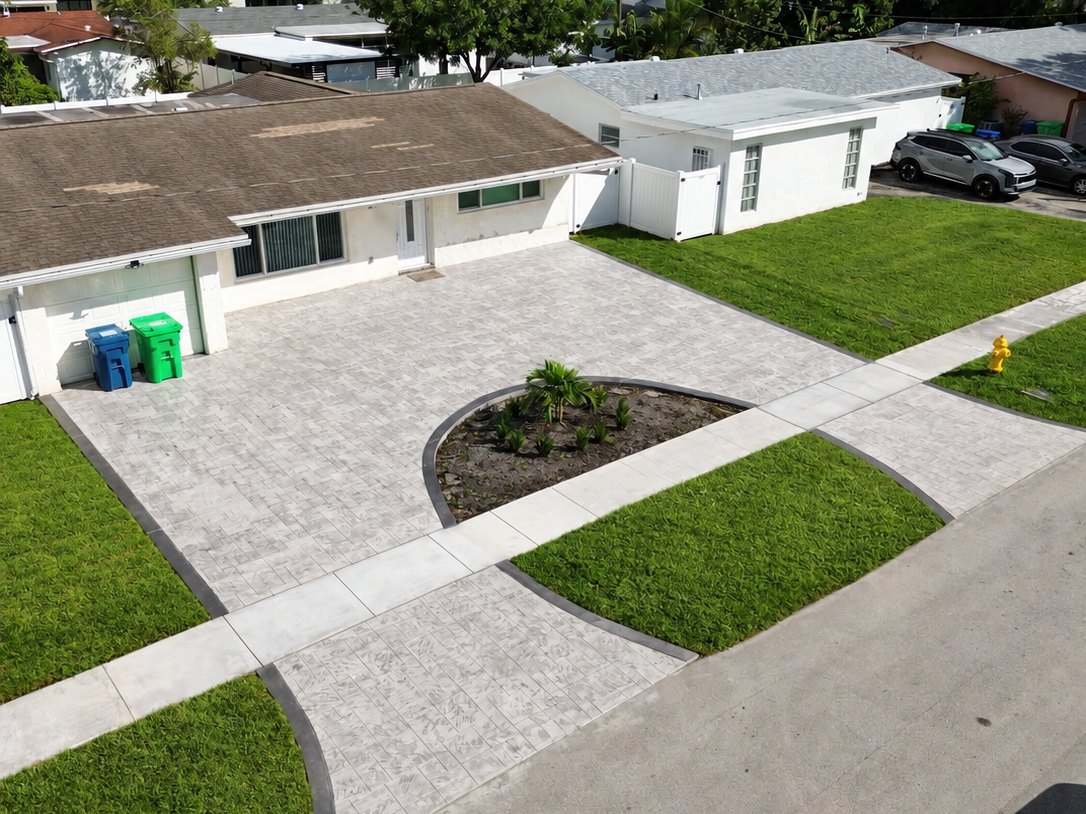
How Long Does a Concrete Driveway Last in South Florida?
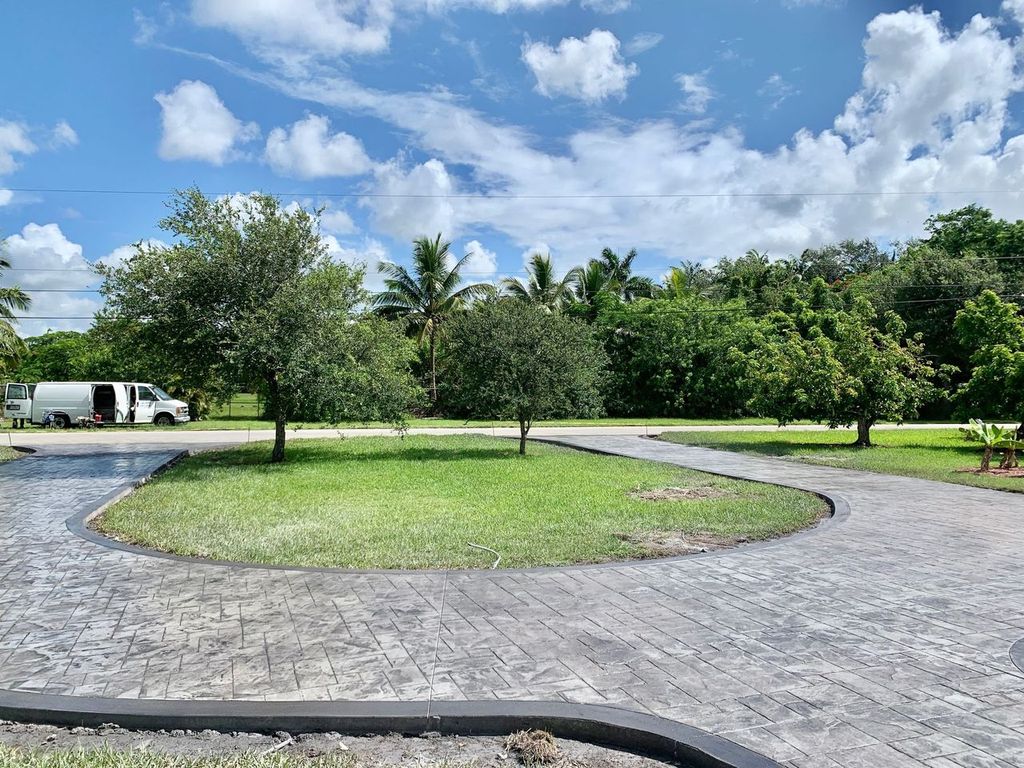
A properly installed concrete driveway in South Florida can last 25-40 years or more.
But that number depends heavily on what happens before the concrete is poured — and how the driveway is maintained afterward.
We’ve seen relatively new driveways develop cracks, settlement, and drainage problems within a few years.
We’ve also seen much older driveways still performing well decades later.
The difference is usually not luck.
It comes down to:
- Base preparation
- Reinforcement
- Drainage
- Concrete thickness
- Control joints
- Curing
- Maintenance
- Vehicle loads
- Tree roots
At Concrete Designs LLC, we’ve spent more than 20 years building driveways and outdoor living projects throughout Miami-Dade and Broward.
Here’s what really determines how long a concrete driveway lasts in South Florida — and what homeowners can do to get the most life out of it.
What Is the Average Lifespan of a Concrete Driveway?
For most residential properties, a well-built concrete driveway can often last around:
25-40+ years
Some last longer.
Others fail much sooner.
That’s because “concrete driveway” describes the surface, not the quality of the installation underneath it.
Two driveways can look almost identical the day they’re finished.
One may have:
- Properly compacted base
- Correct reinforcement
- Good drainage
- Well-placed control joints
The other may have been poured over poorly prepared soil with inadequate grading.
You often won’t see the difference immediately.
Five or ten years later?
You probably will.
“Anybody can make concrete look good the week it’s poured. The real question is what it looks like years later.”
South Florida Weather Is Tough on Concrete
A driveway in South Florida deals with different conditions than one in a cooler, drier climate.
Our biggest challenges include:
- Intense UV exposure
- High temperatures
- Heavy rainfall
- Humidity
- Tropical storms
- Saturated soils
- Tree roots
Florida doesn’t have the same freeze-thaw cycle that damages concrete in northern states, which is an advantage.
But we have plenty of other challenges.
Heavy rainfall and poor drainage can slowly erode or destabilize the material supporting the slab.
Once that happens, the concrete above starts moving.
That’s when homeowners begin seeing:
- Settlement
- Cracks
- Low spots
- Broken corners
- Uneven panels
Base Preparation Is the Biggest Lifespan Factor
The most important part of your driveway is usually the part you never see.
The base.
Before concrete is poured, the site should be prepared correctly.
Depending on project conditions, that may include:
- Removing the existing driveway
- Excavating unsuitable material
- Preparing the subgrade
- Installing appropriate base material
- Compacting the base
- Setting elevations and drainage
- Installing reinforcement
- Forming the driveway
If the base settles, the concrete settles with it.
That's why we don't like shortcuts during preparation.
A beautiful finish can't compensate for movement underneath.
Drainage Can Add Years — or Take Them Away
If there's one issue homeowners underestimate, it's water.
Driveways need to shed water properly.
Standing water can contribute to:
- Base erosion
- Settlement
- Surface deterioration
- Algae buildup
- Slippery areas
South Florida thunderstorms can drop a lot of water quickly.
That means the driveway needs to work with:
- Garage elevation
- Sidewalk elevation
- Swales
- Yard grading
- Roof runoff
- Existing drainage
“The finish can be perfect. If we send the water toward your garage, we still built the wrong driveway.”
A quality contractor should be thinking about drainage before the truck arrives.
How Much Does Concrete Thickness Matter?
A lot.
The required thickness depends on the application and approved design.
For many residential applications, around 4 inches of concrete is common, with thicker areas sometimes used where heavier loads or specific conditions require it.
The problem comes when a contractor reduces material to lower the price.
A thinner slab may save money upfront.
It may also become more vulnerable to cracking and failure.
That's one reason homeowners should ask what's actually included in the proposal instead of comparing only total price.
Does Rebar Make a Driveway Last Longer?
Reinforcement can help control movement and hold cracked sections together.
Depending on the approved design, contractors may use:
- Reinforcing steel
- Welded wire reinforcement
- Other specified systems
But reinforcement is not magic.
Rebar installed poorly doesn't fix:
- A bad base
- Poor drainage
- Improper concrete placement
Everything needs to work together.
Good driveway construction is a system.
Why Control Joints Matter
Concrete moves.
It shrinks as it cures.
It expands and contracts with temperature changes.
Control joints create planned locations where cracking is more likely to occur.
Without proper joint placement, cracks may appear randomly across the slab.
A good joint layout also considers the shape of the driveway.
Large irregular sections and sharp inside corners can be more prone to cracking.
This is one of those details homeowners may never notice when it’s done correctly.
But they definitely notice when it isn’t.
Tree Roots Can Destroy an Otherwise Good Driveway
South Florida landscaping can be aggressive.
Large trees can create root systems that eventually reach beneath driveways.
Over time, roots may:
- Lift sections
- Crack concrete
- Distort drainage
- Create trip hazards
If you already have mature trees near the driveway, they should be part of the conversation before replacement.
Simply removing damaged concrete and pouring over active root issues may only reset the clock.
The cause needs to be understood first.
Heavy Vehicles Matter Too
Not every residential driveway is used the same way.
A driveway regularly supporting:
- Heavy work trucks
- Large trailers
- RVs
- Commercial vehicles
may need different consideration than one supporting two passenger cars.
If you know heavier vehicles will regularly use the driveway, tell the contractor before installation.
That may affect:
- Concrete thickness
- Reinforcement
- Base preparation
We’d rather know before the pour than after the first heavy truck shows up.
How to Make a Concrete Driveway Last Longer
Homeowners can do several simple things to extend driveway life.
1. Keep Water Moving
Pay attention to new low spots or areas where water begins pooling.
Drainage changes can develop over time as landscaping and soil conditions change.
2. Keep Heavy Loads in Mind
Avoid repeatedly placing loads on areas that weren't designed for them.
Edges are especially vulnerable.
3. Address Cracks Early
Not every crack is structural.
But cracks should still be monitored.
If one begins widening or showing vertical movement, it may indicate a larger issue.
4. Keep Tree Roots Under Control
Pay attention to trees planted close to the driveway.
5. Clean the Surface
Periodic cleaning helps remove:
- Algae
- Dirt
- Oil
- Organic buildup
This is especially helpful in South Florida humidity.
6. Maintain Decorative Sealers
Stamped and decorative concrete may benefit from periodic resealing according to the system used.
Avoid assuming more sealer is always better.
The correct product and application matter.
Should You Seal a Plain Concrete Driveway?
It depends.
Sealers can help protect concrete from:
- Staining
- Moisture penetration
- Surface wear
But different sealers behave differently.
Some change the appearance.
Some create sheen.
Some can affect traction.
If you’re considering sealing a driveway, choose a product designed for exterior concrete and follow the manufacturer’s instructions.
For stamped concrete, sealing is often a bigger part of maintaining the decorative finish.
How Long Does Stamped Concrete Last?
Stamped concrete is still concrete.
When installed correctly, the slab itself can provide a similar long service life.
The decorative appearance requires more maintenance.
Over time, you may need to address:
- Sealer wear
- Color fading
- Surface appearance
That doesn't necessarily mean the concrete is failing.
It means the finish needs attention.
Typical stamped driveway pricing in South Florida often falls around $12-$20 per square foot, compared with roughly $8-$15 per square foot for plain concrete.
Those are planning ranges only.
Does Cracking Mean the Driveway Is Failing?
Not automatically.
Small cracks can develop even in well-built concrete.
What we pay attention to is the type of crack.
Usually Less Concerning
- Fine shrinkage cracks
- Small stable cracks
- Cracks without elevation changes
More Concerning
- Wide cracks
- Multiple intersecting cracks
- Vertical displacement
- Sinking sections
- Cracks associated with drainage problems
The crack itself is often only the symptom.
The real question is why it happened.
When Should You Repair Instead of Replace?
Repair can make sense when:
- Damage is isolated
- The rest of the driveway is stable
- Drainage is working
- There is no major settlement
Replacement may make more sense when:
- Cracking is widespread
- Multiple panels have moved
- The base is failing
- Drainage needs correction
- Tree roots caused extensive damage
We don't believe every cracked driveway needs replacement.
If a repair is the smarter approach, we'd rather tell you.
Tell you straight if there's a better way to do it.
Signs Your Driveway Is Reaching the End of Its Life
Watch for combinations of problems rather than one small defect.
Common warning signs include:
- Extensive cracking
- Multiple sunken sections
- Constant standing water
- Crumbling edges
- Major root lifting
- Repeated failed repairs
- Large elevation differences
If you’re repairing a different section every year, it may be time to stop chasing individual problems and evaluate the entire driveway.
How Much Does Replacing a Concrete Driveway Cost?
For South Florida planning:
Plain Concrete
Approximately $8-$15 per square foot
Stamped Concrete
Approximately $12-$20 per square foot
Actual pricing depends on:
- Demolition
- Size
- Access
- Drainage
- Reinforcement
- Permits
- Existing conditions
- Decorative finishes
That's why we don't give final driveway prices without seeing the property.
I'd rather walk it with you before we put a number on it.
Don't Choose a Driveway Contractor Based on the Finish Alone
Look at the finished driveways.
Of course.
But ask about everything underneath too.
Ask:
- How is the base prepared?
- How is drainage handled?
- What reinforcement is included?
- What concrete thickness is planned?
- Where will control joints go?
- Are permits included?
- Who handles inspections?
That's how you compare installations.
Not just by choosing whichever contractor shows you the nicest photo.
A Driveway Should Be Built for Decades
A driveway is one of those projects you should not have to think about every few years.
Build the base correctly.
Manage water.
Use appropriate reinforcement.
Maintain the surface.
And don't ignore problems when they start.
Do that, and a concrete driveway can serve a South Florida home for decades.
After more than 20 years doing this, we'd rather build something once the right way than make a job cheaper by removing the parts homeowners can't see.
We don't disappear after the job.
Family-owned · 20+ years · Miami-Dade & Broward.
FAQs
How long should a concrete driveway last in Florida?
A properly installed residential concrete driveway can often last around 25-40 years or longer, depending on base preparation, drainage, traffic, environmental conditions, and maintenance.
Does Florida heat damage concrete driveways?
Concrete is well suited to Florida, but intense heat contributes to expansion and contraction. Proper control joints, installation, and curing help manage movement.
How can I extend the life of my concrete driveway?
Keep drainage working, monitor cracks, avoid excessive loads, address root problems, clean the surface, and maintain decorative sealers where applicable.
Should I repair cracks in my driveway?
Minor stable cracks may be repairable. Wide cracks, settlement, vertical movement, or widespread damage should be evaluated to determine whether there is an underlying problem.
Is stamped concrete as durable as regular concrete?
The structural slab can be similarly durable when installed correctly. Stamped concrete generally requires additional maintenance to preserve its decorative color and sealer.
Ready to get started? Get a free on-site estimate from the Concrete Designs team — we'll walk your property, talk through what's possible, and send you a fixed-price quote with no surprises. Call (786) 269-9215, or message us at concretedesignsllc.com. Ask about 0% APR financing through Wisetack and Wells Fargo. Family-owned · 20+ years · Miami-Dade & Broward.