Artificial Turf in Davie: HOA-Compliant Installations for Acre Lots
Artificial turf makes a lot of sense in South Florida.
Less mowing. Less irrigation. No muddy patches after heavy rain. Cleaner spaces for pets, kids, and entertaining.
But in Davie, especially on larger acre lots, turf projects come with a different set of questions.
How much of the property should actually be converted? Will the HOA allow it? How do you handle drainage over a much larger area? And how do you keep the installation from looking too artificial next to mature landscaping, horse fencing, or estate-style homes?
At Concrete Designs LLC, we’ve spent more than 20 years building outdoor living spaces throughout Miami-Dade and Broward. Family-owned, hands-on, and honest about what works long-term in South Florida conditions.
Here’s what homeowners in Davie should know before installing artificial turf on a larger property.
Why Artificial Turf Works Well on Davie Acre Lots
Davie is different from many other Broward County communities.
A lot of properties have:
- Larger yards
- Wider side setbacks
- Mature trees
- Long driveways
- Pool areas
- Dog runs
- Equestrian-style landscaping
- More open space than a typical suburban lot
That means artificial turf can solve several real problems.
Homeowners often use it for:
- Poolside areas
- High-traffic zones
- Pet runs
- Side yards
- Outdoor entertainment areas
- Concrete slab transitions
- Areas where natural grass constantly struggles
For many acre-lot properties, the best approach is not replacing every square foot of lawn.
It’s using turf strategically where maintenance, drainage, and appearance improve the most.
“Bigger property doesn’t mean you need turf everywhere. Sometimes the better design is using it only where it solves a real problem.”
That’s usually how we approach larger yards in Davie.
HOA Approval Comes Before Installation
One of the biggest mistakes homeowners make is assuming artificial turf is automatically allowed because it’s landscaping.
That isn’t always the case.
Many HOAs regulate:
- Whether artificial turf is permitted
- Where it can be installed
- Turf color and blade height
- Front-yard visibility
- Transitions to natural landscaping
- Percentage of artificial coverage
- Border treatments
Some communities are much more accepting of backyard or side-yard turf than highly visible front-yard installations.
Before construction starts, homeowners should check their current HOA architectural guidelines.
You may be asked to submit:
- A site plan
- Turf product specifications
- Color samples
- Photos or renderings
- Contractor information
- Proposed installation area
HOA rules can vary substantially even between nearby communities, so approval should be confirmed for the specific property.
The Best Artificial Turf Designs for Acre Lots
Large properties need scale.
A small patch of artificial turf that works well behind a townhouse can look completely different in a wide-open Davie backyard.
The best larger-lot designs often combine turf with other materials.
Turf Around Pool and Patio Areas
This is one of the most practical applications.
Artificial turf can create a clean transition between:
- Pool decks
- Patios
- Pergolas
- Outdoor kitchens
- Landscape beds
It reduces mud and creates a more finished entertainment zone.
Dedicated Pet Areas
Instead of converting an entire yard, many homeowners create a dedicated turf dog run.
This can simplify:
- Cleanup
- Mud control
- Maintenance
- Separation from landscaped areas
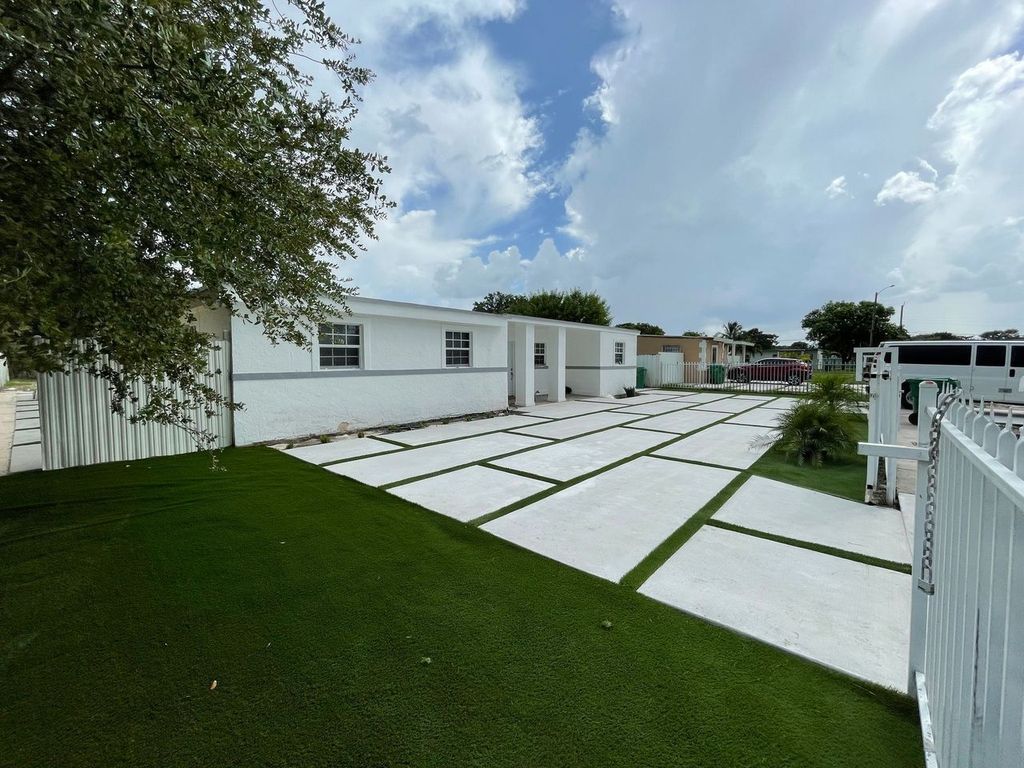
Large Concrete Slabs With Turf Joints
Modern outdoor living projects often combine oversized concrete slabs with narrow turf strips.
This creates a clean contemporary look without turning the entire backyard into artificial grass.
Side-Yard Turf
Side yards often struggle with shade, poor grass growth, and drainage.
They’re also one of the easiest areas to improve with turf.
Drainage Matters Even More on Larger Properties
Acre lots create more opportunity for water movement.
And in South Florida, that means drainage needs to be considered carefully.
Artificial turf itself can drain quickly, but the property still needs somewhere for that water to go.
Before installation, a contractor should evaluate:
- Existing slopes
- Low areas
- Roof runoff
- Pool drainage
- Swales
- Landscape beds
- Neighboring elevations
Poor planning can create standing water underneath or around the turf.
That can lead to:
- Odors
- Soft spots
- Base movement
- Surface unevenness
- Long-term drainage problems
“Artificial turf doesn’t fix bad drainage by itself. If the property already holds water, we need to solve that first.”
That’s especially important on large Davie properties where water may travel much farther across the yard.
Base Preparation Is What Makes Turf Last
The turf fibers are what homeowners see.
The base is what determines whether the installation holds up.
A professional installation typically includes:
- Removal of grass and organic material
- Excavation
- Compacted aggregate base
- Grading
- Drainage preparation
- Turf layout
- Seam installation
- Edge securing
- Infill
- Final grooming
Skipping excavation or compaction may lower the initial price, but that’s often where future problems begin.
A weak base can cause:
- Sinking
- Rippling
- Uneven seams
- Poor drainage
- Premature failure
On larger properties, consistent compaction becomes even more important because there is more surface area that can settle differently over time.
Artificial Turf for Pets and Larger Dogs
Davie homeowners frequently have larger dogs and bigger yards.
That changes the turf conversation.
Pet-friendly systems should prioritize:
- Fast drainage
- Easy rinsing
- Durable fibers
- Odor control
- Strong seam construction
High-traffic areas near gates, patios, and preferred bathroom zones may need additional attention during installation.
Routine maintenance is still simple, but pet turf is not completely maintenance-free.
Homeowners should:
- Remove solid waste quickly
- Rinse high-use areas
- Keep drainage paths clear
- Remove organic debris
A properly designed system can dramatically reduce muddy paws and worn-out grass areas.
Will Artificial Turf Look Natural on an Acre Lot?
It can, but product selection matters.
On large properties, overly bright or perfectly uniform turf can look artificial quickly.
For a more natural appearance, homeowners often choose products with:
- Multiple green tones
- Brown thatch layers
- Mixed blade shapes
- Matte rather than overly glossy fibers
The landscaping around the turf matters too.
Combining artificial turf with:
- Mature trees
- Natural stone
- Mulch beds
- Concrete
- Native landscaping
can create a much more intentional result.
How Much Does Artificial Turf Cost in Davie?
Artificial turf pricing depends on:
- Total square footage
- Turf product
- Excavation
- Drainage conditions
- Access
- Pet upgrades
- Base requirements
- Custom edging
Large acre-lot projects may benefit from scale, but access and drainage complexity can also increase labor.
That’s why we don’t like throwing out an exact number without seeing the property.
We’d rather walk it with you before we put a number on it.
The better question is usually not:
“What does turf cost per square foot?”
It’s:
“Which parts of this property are actually worth converting?”
That can save homeowners from spending money where turf doesn’t add much value.
Questions to Ask Before Hiring a Turf Contractor
Before starting an artificial turf project in Davie, ask:
- Has the HOA approved the design?
- How is drainage being handled?
- What base material is being installed?
- How deep is the excavation?
- Is the turf appropriate for pets?
- How are seams secured?
- What areas should remain natural grass?
- How will the turf transition into landscaping?
Those details often matter more than the turf brand itself.
Should You Turf the Entire Acre?
Usually, we wouldn’t recommend automatically doing that.
Some homeowners want the zero-maintenance appeal of covering everything.
But large properties often look better when artificial turf is used intentionally.
Keeping natural landscaping in certain areas can:
- Preserve character
- Reduce project cost
- Improve visual variety
- Maintain estate-style appearance
For many Davie homes, the best layout combines:
- Artificial turf
- Concrete or pavers
- Natural landscaping
- Shaded structures
- Existing lawn areas
That balance usually looks more natural and functions better.
Why Local Experience Matters
A turf project in Davie isn’t the same as a 400-square-foot townhouse backyard.
Larger properties require more planning around:
- Drainage
- Scale
- HOA rules
- Pet use
- Landscape integration
- Long-term maintenance
That’s where experience helps.
“We don’t disappear after the job. If we’re covering a large section of your backyard, we want it draining properly and still looking right years later.”
Family-owned · 20+ years · Miami-Dade & Broward.
FAQs
Is artificial turf allowed by HOAs in Davie?
It depends on the specific community. Some HOAs allow turf with architectural approval, while others restrict placement, product type, or front-yard use.
Is artificial turf a good choice for acre lots?
Yes, especially when used strategically around patios, pools, pet areas, side yards, and other high-maintenance zones.
Does artificial turf drain well during South Florida rain?
A properly installed turf system can drain very well, but overall property grading and drainage still need to be evaluated.
Should I replace my entire lawn with artificial turf?
Not necessarily. On larger Davie properties, combining turf with natural landscaping and selected lawn areas often creates a better-looking and more cost-effective result.
Ready to get started? Get a free on-site estimate from the Concrete Designs team — we'll walk your property, talk through what's possible, and send you a fixed-price quote with no surprises. Call (786) 269-9215, or message us at concretedesignsllc.com. Ask about 0% APR financing through Wisetack and Wells Fargo. Family-owned · 20+ years · Miami-Dade & Broward.